
The playground was buzzing with the familiar sound of children at play when I overheard a conversation that stopped me in my tracks. Two mothers were discussing their elaborate protocols for keeping their children “safe” from germs – the hand sanitizer stations, the antibacterial wipes, and the careful avoidance of anything that might harbour bacteria.
“I just can’t risk him getting sick,” one mother said, watching her child navigate the monkey bars. “There are so many germs out there.”
I understood her fear. We live in a culture that has taught us to see the microbial world as our enemy, to believe that health comes from elimination rather than resilience. But after 26 years of holistic healthcare practice, I’ve witnessed something profound: the children who are most protected from everything in their environment are generally the ones who struggle most with illness.
This isn’t about being reckless or ignoring genuine health concerns. It’s about understanding a fundamental truth that our germ-obsessed culture has forgotten: exposure, when appropriate and gradual, is how we build the robust immunity our children need to thrive.
The Microbiome Revolution
Recent research has revolutionized our understanding of the human microbiome – the trillions of bacteria, viruses, and fungi that live in and on our bodies. Far from being invaders to be eliminated, these microorganisms are essential partners in our health. They help digest our food, synthesize vitamins, regulate our immune system, and even influence our mood and behaviour.
When we constantly sanitize our children’s environment, we’re not just eliminating “bad” germs – we’re also destroying the beneficial microorganisms that are essential for healthy immune development. We’re creating what researchers call “immune amnesia,” where the immune system, lacking proper training through exposure, becomes either overreactive (leading to allergies and autoimmune conditions) or underreactive (leading to frequent infections).
The Hygiene Hypothesis in Action
The hygiene hypothesis suggests that early childhood exposure to microorganisms is crucial for proper immune system development. Children who grow up in overly sanitized environments often develop higher rates of asthma, allergies, and autoimmune disorders. Conversely, children who have regular exposure to diverse microorganisms – through playing in dirt, interacting with animals, and yes, getting the occasional cold – tend to develop more robust, balanced immune systems.
This doesn’t mean we should abandon all hygiene practices. It means we need to distinguish between reasonable cleanliness and obsessive sterilization. Washing hands before eating and after using the bathroom makes sense. Sanitizing every surface your child touches does not.
Building Resilience, Not Resistence
True immunity isn’t about avoiding all pathogens – it’s about building a system that can recognize, respond to, and recover from challenges effectively. When we allow our children appropriate exposure to the microbial world, we’re giving their immune systems the training they need to function optimally.
Here are some practical ways to support your child’s immune development:
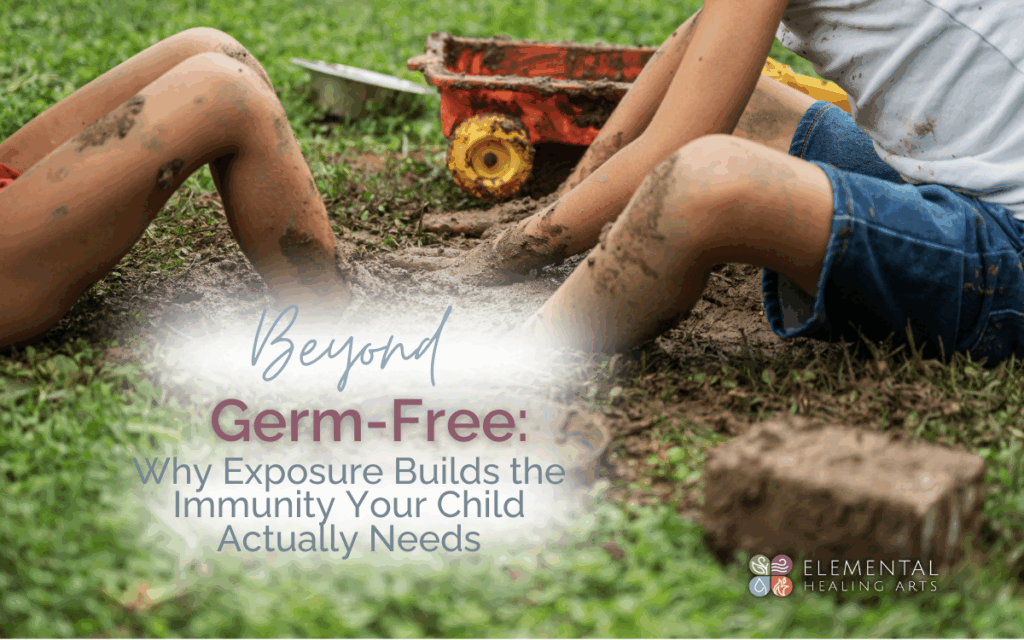
Embrace Outdoor Play: Let your children play in dirt, climb trees, and explore nature. The diverse microorganisms found in natural environments are excellent immune system trainers.
Limit Antibacterial Products: Use regular soap and water for hand washing. (Even better, choose non-toxic natural or organic soap.) Save antibacterial products for situations where they’re truly necessary, such as when caring for someone who is seriously ill.
Support Gut Health: The gut houses about 70% of our immune system. Feed your child’s beneficial bacteria with fermented foods like yogurt, kefir, sauerkraut, and kombucha.
Allow Recovery Time: When your child does get sick, resist the urge to suppress every symptom immediately. Fever, for example, is the body’s way of creating an environment hostile to pathogens while boosting immune function.
Reduce Stress: Chronic stress suppresses immune function. Ensure your child has plenty of downtime, adequate sleep, outdoor play, and opportunities for joy and laughter.
The Wisdom of Balance
This approach requires us to shift from a fear-based mindset to a wisdom-based one. Instead of asking, “How can I protect my child from all germs?” we ask, “How can I help my child develop the resilience to handle whatever they encounter?”
This shift extends beyond physical health. When we trust our children’s bodies to handle appropriate challenges, we’re also teaching them to trust themselves. We’re showing them that they are not fragile beings who need constant protection, but resilient individuals capable of navigating life’s challenges with strength and wisdom.
Your Invitation to Resilience
The goal is not to expose our children to unnecessary risks but to help them develop the robust health that comes from a well-trained immune system. This means embracing a middle path – one that honours both safety and resilience, protection and exposure, caution and trust.
Our children don’t need to live in a sterile bubble. They need to develop the internal strength and wisdom that comes from engaging with the world as it is – messy, microbial, and magnificently alive. When we support this natural process, we give them something far more valuable than temporary protection from germs: we give them the gift of lifelong resilience.
Ready to learn how to build true resilience in your children? My 5-Day Natural Kids Wellness Challenge is now live! You’ll discover evidence-based, holistic approaches to supporting your child’s immune system and overall health. This isn’t about avoiding all illness – it’s about building the robust health that allows children to thrive.
Register here for the 5-Day Natural Kids Wellness Challenge and learn simple, gentle practices to nurture your child’s whole being.