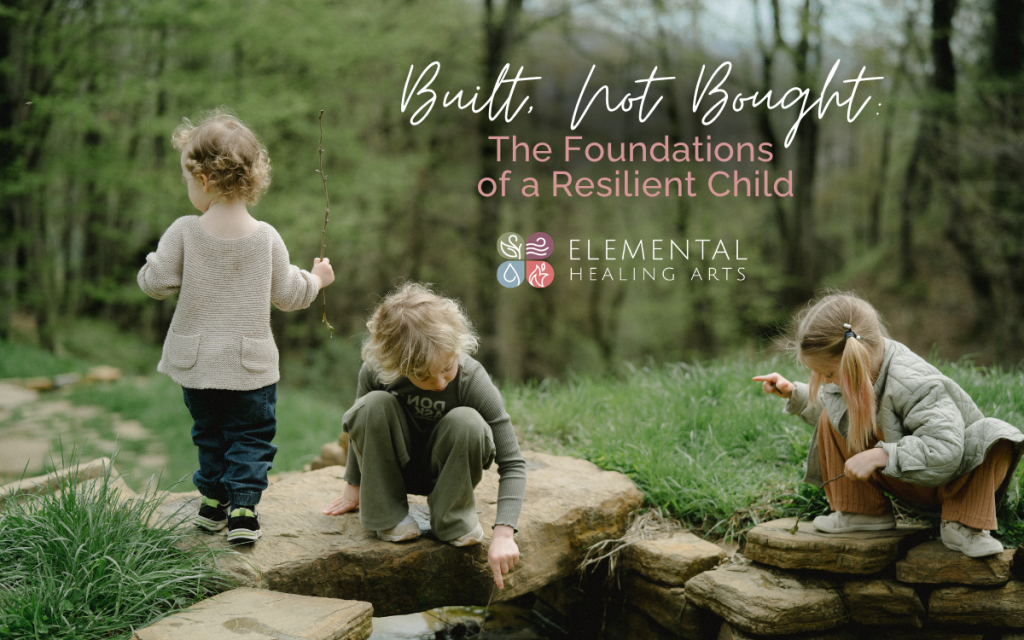

When I watch a mother reach out to help her child with a puzzle, a stubborn zipper, or a tower of blocks, I see so much love. There is a deep, instinctual desire to protect our children from the sting of frustration. We see the brow furrowing, the lip starting to quiver, and our own nervous system rising to meet that discomfort. We want to smooth the path. We want to remove the obstacle.
But after twenty-seven years of working with families, I’ve come to see that our urge to “help” is often where we accidentally interfere with the very thing our children need to develop: self-trust.
We often mistake “helping” for parenting. We believe that by removing the hurdle, we’re making their life easier and, therefore, better. But when we constantly intervene, we are inadvertently teaching our children that they are not capable of navigating their own world. We’re building an invisible curriculum that says: I don’t trust that you can figure this out.
It’s a message they absorb in the quiet of their playtime, in the frustration of their efforts, and in the way we swoop in to solve the problem before they’ve even had a chance to try.
It’s time to cut it out.
When we step back, we aren’t being neglectful. We’re being respectful. We’re honouring the dignity of their struggle. That flicker of frustration they feel when a block tower falls? That’s the sound of a brain growing. That moment when they finally figure out the zipper, after minutes of wiggling and breathing through their annoyance? That’s the sound of a nervous system finding its own competence.
If we take that away, we take away the opportunity for them to say, “I did this!” That “I did this” is the bedrock of sovereignty. It’s the moment a child realizes that they are an active participant in their own life, and their own effort is enough.
How do we shift from interfering to supporting?
- First, observe the struggle. Before you move, take a breath. Is there any danger, or is it just the necessary discomfort of learning? Discomfort is not an emergency; it’s the feeling of a human being expanding.
- Second, narrate, don’t direct. Instead of saying, “Put that piece there,” try saying, “That piece looks tricky. It doesn’t seem to be fitting the way you want.” You’re acknowledging their reality without taking the task away from them.
- Third, use the “Wait” protocol. Count to ten inside your own mind before you offer a single word of guidance. You’ll be amazed at how often children find their own solution during those ten seconds.
Helping is about providing the conditions for growth. Interfering is about bypassing that growth because we feel uncomfortable with our children’s temporary frustration.
Your child’s nervous system is designed for competence. They’re built to navigate, to solve, and to adapt. When you stop “fixing” their world, you allow them to inhabit it fully. You show them that they are capable, resilient, and inherently wise, and that is the most important lesson they will ever learn.
Ready to build the wellness confidence that transforms how your family approaches health? My 5-Day Natural Kids Wellness Challenge is a free resource designed to help you cut out the noise and tune into what truly matters. Sign up below to start building your confident parenting foundation.
Please consider sharing these newsletters with other mums on a holistic parenting journey. Wisdom grows when shared. 💕