Walk into any bookshop, scroll any parenting feed, and you’ll be handed the same promise in a hundred different packages: the right strategy will fix your child’s behaviour. There are scripts for the tantrum, charts for the sticker economy, and consequences calibrated to the crime. The modern parenting industry runs on the belief that behaviour is a technical problem and that somewhere out there is the one technique that will finally make your mornings calm.
I understand the appeal. When you’re standing in the wreckage of a meltdown, exhausted and watched by strangers, a clear script feels like a lifeline. But after twenty-seven years of sitting with families, I have come to believe that our search for the perfect strategy is often the very thing keeping us stuck.
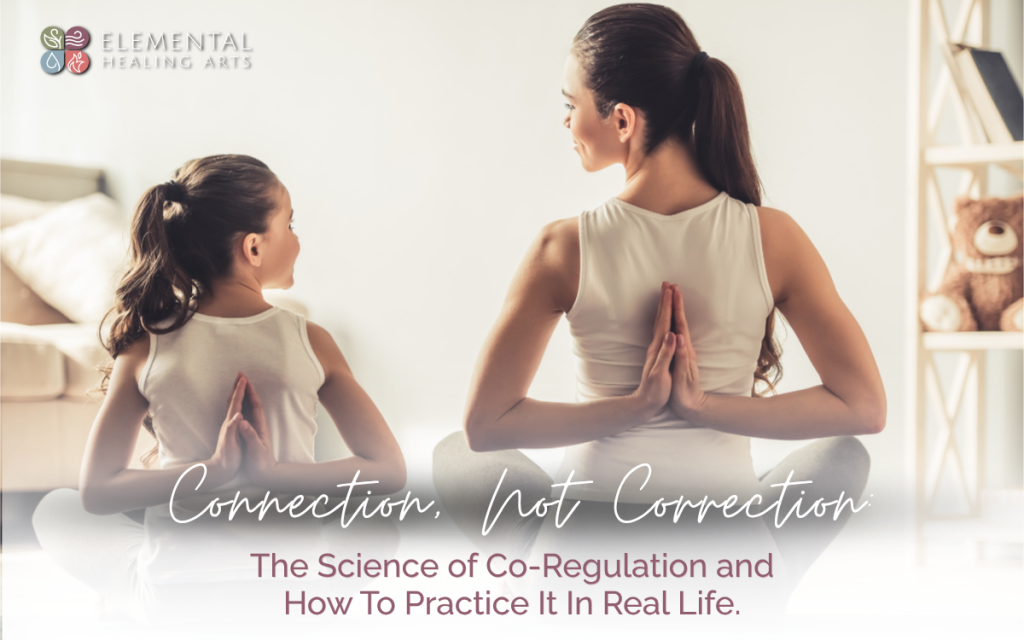
The research on how children actually develop tells a different story, one the behaviour charts leave out entirely. Children do not learn to regulate themselves by being corrected. They learn it by first being co-regulated by a calm adult.
It’s time to cut it out.
It’s time to cut out the belief that your child’s big feelings are a behaviour to be managed, and to replace it with something truer: a dysregulated child is not misbehaving. They are asking, in the only language they have, to borrow your steadiness until they can grow their own.
The Biology of Borrowed Calm
A child is not born with the capacity to soothe themselves. The part of the brain responsible for regulating big emotions, the prefrontal cortex, is years, even decades, from being fully built. When a young child is overwhelmed, they are not choosing to be difficult. Their nervous system has simply exceeded its own capacity, and they have no internal brake to pull.
This is where you come in. Through a process researchers call co-regulation, a child’s nervous system reads the state of the nervous systems around them and calibrates to match. When you are calm, your presence sends a physiological signal of safety – slower breath, softer voice, steady heartbeat – that their body literally borrows. Over thousands of these moments, borrowed calm becomes their own. This is how self-regulation is built: not through instruction, but through repetition, in the safety of connection. Which is also why so much of what we are told to do backfires.
Why Time-Outs and Consequences Often Miss
When we isolate a child at the height of their distress or meet their overwhelm with a raised voice and a consequence, we are asking a brain that has lost its footing to find it entirely alone. But a dysregulated child cannot reach the reasoning part of their brain, no matter how logical our lecture. And a dysregulated parent cannot co-regulate a struggling child; our panic simply becomes their panic, our escalation their escalation.
This does not mean that there are no limits. Connection is not permission. It means the boundary is held by a calm body, not a loud one, and that we tend to the storm before we teach the lesson.
How to Practice Co-Regulation in Real Life
None of this happens in the tidy conditions of a parenting book. It happens on the kitchen floor at six in the evening, when everyone is tired and no one is at their best. Here’s what the practice actually looks like:
• Regulate yourself first. Before you say a single word, feel your feet on the floor and take one slow breath into your belly. You cannot offer a steadiness you are not standing in. This is not a delay in helping your child. It is helping your child.
• Get low and get close. Come down to their level. Soften your voice rather than raising it. Your calm body, near theirs, does more regulating than any words you could choose.
• Name what you see, not what you fear. “Your body is having really big feelings right now, and I’m right here.” You are not endorsing the behaviour. You are reflecting their reality back through a steady presence, which is exactly what helps a nervous system settle.
• Hold the limit with warmth. “I won’t let you hit. I’m going to stay right here with you.” The boundary and the connection travel together. One without the other is either permissiveness or fear.
• Teach after, not during. The conversation about what happened and what to try next time only happens once the storm has passed and the thinking brain is back online. In the height of it, connection is the only lesson that reaches them.
When It Falls Apart, Because It Will
You will lose your calm. You will raise your voice, reach for the consequence, and get it exactly wrong. Some days you will do all three before lunch. This is the part the strategies never mention: the repair.
When you return to your child afterward, kneel down, and say, “I got big and loud earlier. That wasn’t your fault. I’m sorry, and I love you,” you are not simply undoing a mistake. You are teaching the most important lesson of all: that connection can survive rupture, that love is not withdrawn when things go wrong, and that repair is always possible. A child who learns this grows into an adult who can weather conflict without abandoning themselves or the people they love.
Your child’s nervous system was never waiting for the perfect strategy. It was waiting for you, steady and imperfect and present. You lend your calm until they can find their own, and there is no more important work than that.
Ready to build the wellness confidence that transforms how your family approaches health? My 5-Day Natural Kids Wellness Challenge is a free resource designed to help you cut out the noise and tune into what truly matters.
Sign up here to start building your confident parent foundation.
Please consider sharing these newsletters with other mums on a holistic parenting journey. Wisdom grows when shared. 💕