
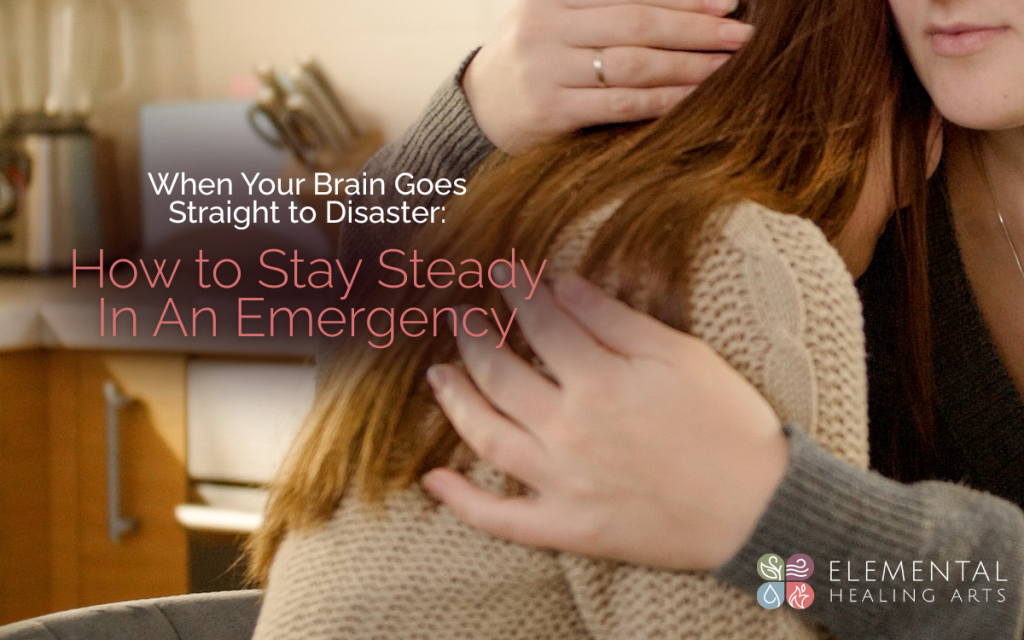
Your child falls, and before you see any blood, your nervous system has already declared a five-alarm fire. A cough in the night doesn’t just wake you; it floods your mind with images of a hospital visit. Your brain, in its fierce and primal attempt to protect your child, goes straight to disaster.
This is not a personal failing. Your nervous system is designed to detect threats, and to a parent, the potential for harm to a child is the greatest threat of all. But we are living in an era that has weaponized this instinct. A culture of medical fear, 24-hour news cycles, and an endless stream of worst-case scenarios on the internet have trained our nervous systems to be in a state of chronic, low-grade hypervigilance. We are conditioned to panic first and assess later.
The problem is that a dysregulated parent cannot co-regulate a struggling child. When you’re in a state of panic, you are physiologically incapable of offering the calm, steady presence your child needs to feel safe. Your panic becomes their panic. Your fear confirms their fear.
It’s time to cut out the cultural conditioning that tells you panic is a prerequisite for responsible parenting. It’s time to reclaim your role as the calm anchor in your child’s storm.
From Hijacked to Anchored: Understanding the Shift
The shift from panic to presence is not about suppressing your concern. It’s about learning to distinguish between the story your fear is telling you and the reality of the situation in front of you. It’s the practice of creating enough internal space to make a conscious choice about how you respond, rather than being a victim of your own reaction.
This begins with understanding what is happening in your body. When your brain perceives a threat, it triggers the sympathetic nervous system, the “fight or flight” response. Your heart rate increases, your breathing becomes shallow, and your ability to think rationally diminishes. You are, in a very real sense, hijacked by your own biology.
Your work is to learn how to send a safety signal back to your own nervous system, so you can then become a safety signal for your child.
How to Stay Steady: A Practice for the Moment
Here’s a practical framework for what to do in the moments when your brain goes straight to disaster:
- Anchor Yourself First. Before you rush to your child, take one second to feel your feet on the floor. Plant them firmly. This simple physical act sends a powerful grounding signal to your brain, interrupting the upward spiral of panic. You cannot be a steady anchor for your child if you are not anchored yourself.
- Breathe Into Your Belly. Take one slow, deep breath, focusing on expanding your belly, not your chest. This is the fastest way to activate the parasympathetic nervous system, the “rest and digest” system that counteracts the panic response. Model the calm you want your child to feel.
- Narrate the Reality, Not the Fear. As you approach your child, speak in a calm, low tone. Narrate what you see, not what you fear. Instead of “Oh my God, are you okay?!”, try “I see you fell down. That looks like it was a big surprise.” This external narration helps to keep your own brain in the present moment and provides a soothing, regulating presence for your child.
- Assess, Then Act. Once you are with your child and have created a small pocket of calm, you can assess the situation clearly. Is this a scrape that needs a wash and a cuddle? Is this a fever that needs monitoring? Or is this a true emergency that requires immediate, decisive action? When you are not in a state of panic, your intuition is sharp and your decisions are clear.
This is a practice. Every time you choose to pause and anchor yourself before reacting, you are rewiring your own nervous system. You’re teaching your body, and modelling for your child, that it’s possible to be concerned without being consumed by panic. You are becoming the safe harbour in the storm.
Ready to build a foundation of calm confidence for your family’s health? My 5-Day Natural Kids Wellness Challenge is a free resource designed to help you trust your instincts and cut through the noise.
Please consider sharing these newsletters with other mums on a holistic parenting journey. Wisdom grows when shared. 💕